Quick Answer: Chips smaller than a quarter and cracks shorter than three inches can often be repaired. Anything larger, anything in the driver’s direct line of sight, or any damage that reaches the edge of the windshield almost always requires full replacement. When in doubt, have a technician assess it — a $75 repair beats a $400 replacement every time when the damage qualifies.
 Why This Decision Matters More Than You Think
A chip or crack in your windshield is not just a cosmetic problem. The windshield is a structural component of your vehicle — it accounts for up to 30% of your car’s cabin rigidity in a rollover. A compromised windshield doesn’t provide the same structural support, and in a collision, that matters.
There’s also a legal dimension for Texas drivers. Driving with a cracked windshield that obstructs your vision can result in a fix-it ticket. More practically, if you’re involved in an accident and your windshield was already damaged, your insurance company may dispute coverage on the grounds that the vehicle was in a compromised state. Getting damage assessed quickly is not overcautious — it’s just smart.
How Technicians Decide: Repair vs. Replace
Glass technicians evaluate windshield damage using four criteria. Understanding these helps you know what to expect when you call for an assessment.
- Size: Chips up to one inch in diameter are generally repairable. Cracks up to three inches can often be filled. Beyond those dimensions, the structural integrity of the repair becomes unreliable — the filled area won’t hold under temperature stress or impact.
- Location: Damage in the driver’s primary viewing area — typically a 12-inch zone directly ahead of the steering wheel — is usually grounds for replacement even if it’s small. The repair process can leave slight optical distortion, which is unacceptable in a critical sight line.
- Depth: Windshields have two glass layers with a PVB interlayer. Damage that has penetrated through both glass layers cannot be repaired — the structural bond is gone. Single-layer penetration may still be repairable depending on size and location.
- Edge proximity: Cracks that reach or start within two inches of the windshield’s edge are almost always replacement jobs. Edge cracks spread rapidly and compromise the bonded seal between glass and frame.
Types of Windshield Damage and What They Mean
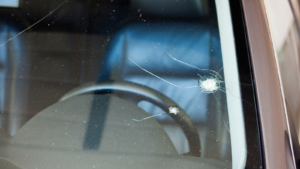
Bull’s-Eye Chip
A circular impact point with a clean cone shape. Usually caused by a rock or road debris. One of the easiest damage types to repair when caught early — the resin fills the cavity cleanly and restores both clarity and structure.
Star Break
A central impact point with cracks radiating outward. Repairable if the cracks are short, but star breaks spread faster than bull’s-eyes under thermal stress. Houston’s summer heat makes this type of damage more urgent — a star break that’s small today can spider across the windshield within a week of parking in direct sun.
Half-Moon or Partial Bull’s-Eye
Similar to a bull’s-eye but not perfectly circular. Generally repairable at small sizes. The irregular shape can trap air during the repair injection, so technician skill matters more here than with a standard bull’s-eye.
Stress Crack
A crack with no obvious impact point, usually caused by temperature extremes — running the AC full blast on a hot windshield, or defrosting in winter. Stress cracks often start at the edge of the windshield and grow. They almost always require replacement because they reflect an underlying structural tension in the glass.
Long Crack
Any crack exceeding three inches. Replacement is the standard recommendation regardless of location. Resin injection in a long crack doesn’t fully restore strength, and the repair line remains a weak point under the flexing forces windshields experience at highway speed.
Common Mistakes That Turn a Repair Into a Replacement
Mistake 1: Waiting Too Long in Houston Heat
Temperature is the enemy of minor windshield damage. A small chip that could have been repaired for $75 on Monday can spider into an eight-inch crack by Friday after sitting in a Houston parking lot at 110°F surface temperature. Every day of delay raises the probability that you’re looking at a full replacement instead of a quick repair.
Mistake 2: Running the Defroster or AC on Damaged Glass
Rapid temperature changes flex the glass. Running the air conditioning at full blast immediately after parking in direct sun creates a sharp thermal gradient across the windshield — warm on the outside, cold on the inside. A chip or crack is a stress concentration point. That thermal shock is often what converts a repairable chip into an unrepairable crack overnight.
Mistake 3: Using DIY Repair Kits on Damage That Doesn’t Qualify
Over-the-counter windshield repair kits work adequately on very small, clean bull’s-eye chips in non-critical locations. They don’t work on cracks, on damage near edges, on star breaks with multiple radiating lines, or on anything approaching the driver’s sightline. Using a kit on damage that requires professional assessment delays the proper fix and can contaminate the break — filled with the wrong resin, some damage can no longer be professionally repaired at all.
Mistake 4: Assuming Insurance Won’t Cover It
Texas drivers with comprehensive coverage are often surprised to learn that windshield repair — not replacement, repair — may be covered with no deductible under many policies. Some insurers waive the deductible entirely for repairs because it’s cheaper for them than paying for a replacement later. Call your insurer before paying out of pocket for a repair, and before deciding the cost isn’t worth it.
Repair vs. Replacement: Side-by-Side Comparison
| Factor | Repair | Replacement |
|---|---|---|
| Typical cost (Houston) | $50–$100 | $250–$500+ |
| Time required | 30–45 minutes | 1–2 hours plus cure time |
| Original factory seal preserved | Yes | No — new seal installed |
| Insurance deductible often waived | Frequently | Rarely |
| Suitable for cracks over 3 inches | No | Yes |
| Suitable for edge damage | No | Yes |
| Result clarity in driver sightline | May leave slight haze | Fully clear |
Recommendation: If your damage is smaller than a quarter, not in your primary sightline, and not near an edge, get a repair assessment first. The cost savings are real and the original seal is preserved. If damage exceeds these limits in any dimension, schedule a replacement promptly — delay only increases the cost.
Why Houston Drivers Trust Action Glass Houston
Honest Assessments, Not Upsells
Some auto glass shops default to recommending replacement because it’s more profitable. Action Glass Houston technicians assess your specific damage against the actual repair criteria and tell you which option is genuinely appropriate — not which one costs more. If your chip can be repaired, they’ll repair it.
Fast Turnaround That Fits a Houston Schedule
Most repairs are completed in under an hour. Replacements typically take one to two hours. Action Glass Houston offers flexible scheduling, including mobile service — technicians come to your home, office, or wherever your vehicle is parked across the Houston metro.
OEM-Quality Glass and Proper Adhesive Cure
Windshield replacement isn’t just about the glass — it’s about the urethane adhesive bond and the cure time before the vehicle is safe to drive. Action Glass Houston uses high-quality adhesives with proper safe drive-away times, and technicians don’t cut corners on cure by sending you off too early. ADAS camera recalibration is addressed on vehicles where the system is mounted to the windshield.
Serving All of Houston and Surrounding Areas
From the Energy Corridor to Clear Lake, Humble to Missouri City, the auto glass team at Action Glass Houston reaches drivers across the full metro area. Mobile service is available so the repair or replacement comes to you.
Frequently Asked Questions
Can a crack really spread overnight in Houston weather?
Yes, and it happens regularly in summer. Glass expands and contracts with temperature. A chip or crack is a weak point where stress concentrates during those shifts. A windshield parked in direct Houston sun can reach surface temperatures above 150°F, then cool rapidly when you start driving with the AC on. That thermal cycling is one of the fastest ways to convert a repairable chip into an unrepairable crack.
Will my insurance cover windshield repair in Texas?
Texas drivers with comprehensive coverage may have windshield repair covered, sometimes with the deductible waived entirely. Replacement coverage depends on your deductible amount — if the replacement cost is less than your deductible, you’ll pay out of pocket. Action Glass Houston works directly with most major insurance providers and can help you understand your coverage before the job starts.
How long does windshield repair take?
A professional repair takes 30 to 45 minutes from start to finish. The resin is injected under vacuum, cured with UV light, and polished. You can drive immediately after — there’s no wait time for a repair. Replacement takes one to two hours, with a minimum safe drive-away time afterward that your technician will specify based on conditions.
Is there any damage that looks repairable but actually isn’t?
Yes. Edge cracks often look short and manageable but cannot be repaired reliably because the edge is a high-stress zone where the repair resin won’t hold. Similarly, damage that appears small on the surface may have already penetrated both glass layers, making repair structurally inadequate. That’s why a professional assessment matters even for damage that looks minor — what you see on the surface doesn’t always reflect the depth.
Don’t Let a $75 Repair Become a $400 Replacement
The longer windshield damage sits untreated in Houston’s heat, the more likely it becomes a full replacement job. If your chip or crack appeared recently, get it assessed now — not next week. Action Glass Houston provides fast, honest assessments across the Houston metro, with mobile service available so you don’t have to take time out of your day to drive in.
Call for a free assessment or request an appointment online. Same-day service is available for damage that’s actively spreading.